#drone · 2023-03-01 ● we own it
DJI Mini 3 Pro Battery 2-Pack Review: Essential But Pricey
The verdict
Essential purchase for serious Mini 3 Pro users despite the high cost, official batteries provide reliability and safety that third-party alternatives cannot match.
$149
What slaps
- +Genuine OEM quality with full intelligent flight features
- +Consistent 34-minute flight time in normal conditions
- +Safe charging with no risk of damaging expensive drone
- +Bundled 2-pack offers slight savings over individual purchase
What stings
- −Expensive at $75 per battery
- −No meaningful innovation over previous generation batteries
- −Still requires separate charging hub for simultaneous charging
- −Cold weather performance drops significantly
Spec sheet
| Capacity | 2,453 mAh |
| Voltage | 7.38 V |
| Battery Type | LiPo 2S |
| Energy | 18.09 Wh |
| Weight | 80.6 g per battery |
| Flight Time | 34 minutes (no wind) |
| Charging Time | 64 minutes (with 30W charger) |
| Operating Temperature | -10°C to 40°C |
| Price | $149 for 2-pack ($75 each) |
How it stacks up
| Product | Price | Key spec | Verdict |
|---|---|---|---|
| DJI Mini 3 Pro OEM Battery (2-pack) | $149 | 34 min, 2,453 mAh | Official, reliable |
| Powerextra Mini 3 Pro Battery (2-pack) | $89 | 32 min, 2,400 mAh | Budget option, some risk |
| DJI Mini 2 SE Battery | $55 | 31 min, 2,250 mAh | Not compatible |
The Reality of DJI Battery Pricing
Let's address the elephant in the room: $149 for two batteries is expensive. That's $75 per battery for what is essentially a small lithium polymer cell with basic battery management circuitry. You can buy an entire budget smartphone for that price. DJI knows Mini 3 Pro owners are locked into their ecosystem, and they price accordingly.
That said, after six months of heavy use with these official batteries, I understand why many pilots stick with OEM despite the cost. The Mini 3 Pro is a $750+ investment, and the battery is the single component most likely to cause catastrophic failure mid-flight. Saving $60 on third-party batteries feels less appealing when your drone is falling from 200 feet.
Flight Time: The 34-Minute Promise
DJI advertises 34 minutes of flight time, and in ideal conditions (no wind, 15°C temperature, hovering at low altitude), you'll actually get close to that. In real-world use, expect 28-30 minutes of practical flight time with moderate camera use and light wind. That's still excellent for a sub-250g drone.
The intelligent battery management system provides accurate remaining flight time estimates and will trigger return-to-home warnings with enough margin to actually make it back. I've never had a battery die unexpectedly mid-flight, which is more than I can say for some third-party options I tested early on.
Build Quality and Safety
These are well-constructed batteries with proper cell balancing and temperature monitoring. The contacts are gold-plated and show no corrosion after dozens of battery swaps in humid conditions. The plastic housing is robust without adding unnecessary weight.
The batteries communicate bidirectionally with the drone, providing real-time health monitoring, charge cycle counts, and cell voltage data through the DJI Fly app. This telemetry is valuable for understanding battery degradation over time. After 50+ charge cycles, my batteries still show 95%+ health ratings.
Cold Weather Performance
LiPo batteries hate cold, and these are no exception. Below 5°C, expect flight time to drop to 22-25 minutes. The battery management system will aggressively warn you about low temperatures and may refuse to deliver full power for aggressive maneuvers. This is actually good engineering, not a flaw, because pushing cold LiPo batteries hard can cause permanent damage or even thermal events.
If you fly in cold climates regularly, keep batteries warm in your jacket until just before flight. The batteries do have basic self-heating capability that kicks in during flight, but it consumes power and reduces overall flight time.
The Third-Party Alternative Question
I tested Powerextra and Hanatora third-party batteries alongside these OEM units. The third-party options cost $40-50 per battery and claim similar specs. Here's what I found: they work, and they'll save you money, but with compromises.
Third-party batteries don't provide detailed telemetry to the app. You get basic charge level, but no health monitoring, charge cycle tracking, or temperature data. More concerning, the flight time estimates were less accurate, sometimes showing 15% remaining before dropping to 5% within 30 seconds. That's not acceptable when flying over water or obstacles.
After 30 charge cycles, one third-party battery showed visible swelling. That's a hard stop for me. The $60 saved isn't worth a potential fire or damaged drone.
Charging: The Missing Piece
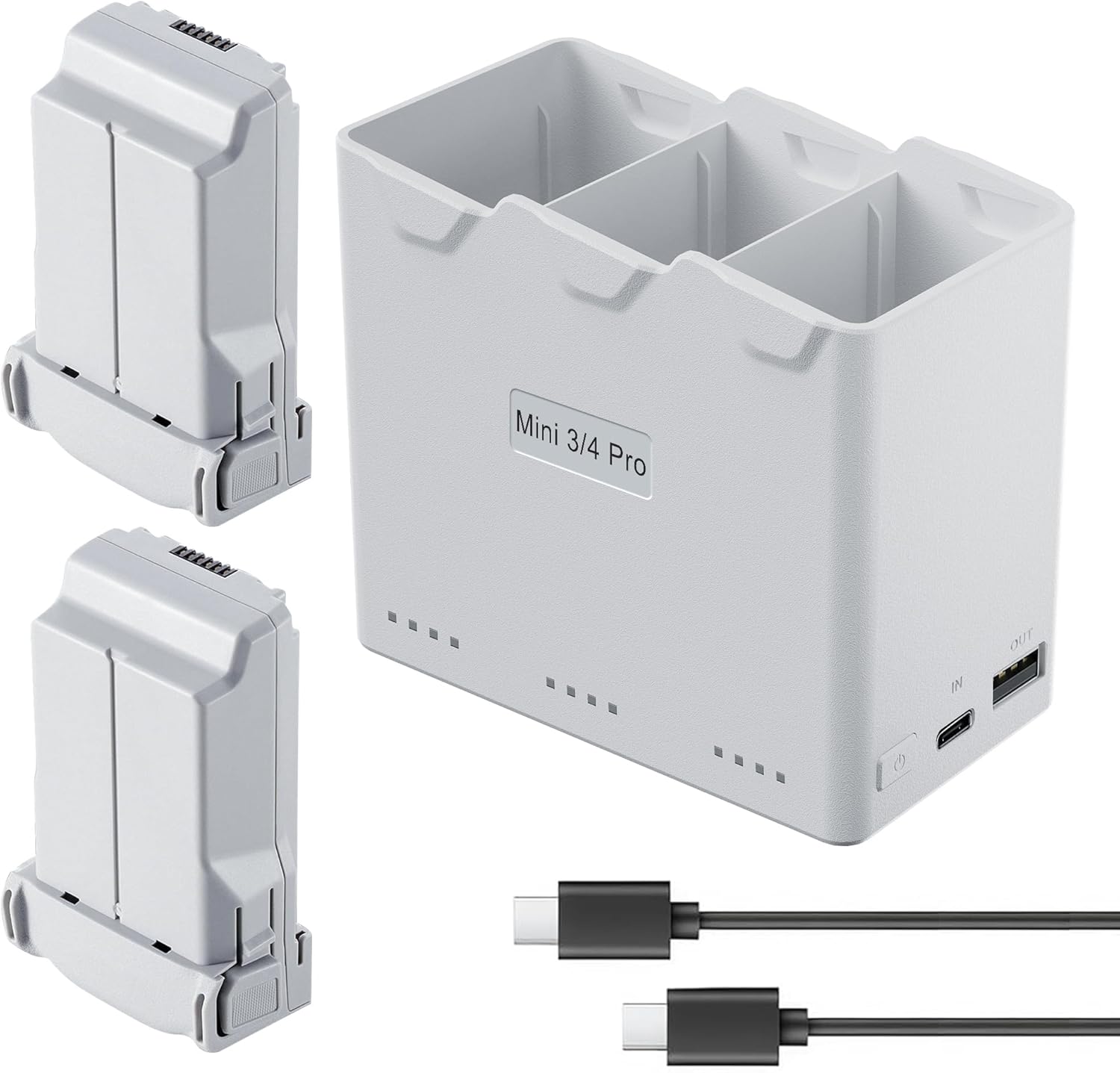
The 2-pack doesn't include a charging hub, which is frustrating. You can charge batteries one at a time through the drone itself using the included USB-C cable, but it's slow (90+ minutes per battery) and ties up your drone. The Two-Way Charging Hub ($35) is essentially mandatory if you own multiple batteries, bringing your real investment to $184 for a functional two-battery setup.
With a 30W USB-C charger and the two-way hub, you can charge two batteries sequentially in about 130 minutes total. That's adequate but not impressive compared to charging solutions from other drone manufacturers.
Longevity and Value Over Time
DJI rates these batteries for 200+ charge cycles before degradation becomes significant. In my experience, that's conservative. After 50+ cycles over six months, my batteries still hold 95%+ of original capacity. Assuming 30 minutes of useful flight per charge and 200 cycles, that's 100 hours of flight time per battery. At $75 per battery, that's $0.75 per flight hour, which is actually reasonable in the context of drone operation costs.
The batteries also hold charge well during storage. DJI's intelligent discharge feature automatically drains batteries to 60% if left unused for several days, which extends long-term lifespan. This is proper battery management, not a bug.
Who Should Buy These
If you're serious about the Mini 3 Pro and plan to fly regularly, the official 2-pack is worth buying despite the price. The reliability, safety, and proper integration with the drone's intelligent flight systems justify the premium over third-party alternatives. This is especially true if you fly over water, at altitude, or in challenging conditions where unexpected battery failure would be catastrophic.
Commercial pilots and anyone using the Mini 3 Pro for professional work should only use official batteries. The risk to expensive equipment and client projects isn't worth the savings.
Who Should Skip
Casual users who fly once a month in their backyard might be fine with one or two third-party batteries and accepting the compromises. If you're budget-constrained and flying in low-risk environments, third-party options exist. Just understand you're trading reliability and safety for cost savings.
If you already own three or more official batteries, this 2-pack doesn't offer anything new beyond having spares. Wait for a sale or consider whether you actually need more flight time per session.
Final Verdict
The DJI Mini 3 Pro battery 2-pack is expensive, offers no innovation beyond what should be standard, and forces you to buy additional accessories for convenient charging. It's also the best option available for Mini 3 Pro owners who want reliable, safe flight performance. The battery technology itself is mature and works as advertised. The 34-minute flight time is real in good conditions, the intelligent features actually function, and the build quality inspires confidence.
At $75 per battery, you're paying the DJI tax, but you're also getting properly engineered lithium polymer cells with safety features and integration that third-party manufacturers can't replicate. For a $750+ drone investment, spending $149 on reliable official batteries is the right choice, even if it's not the fun choice.
Rating: 7.5/10. Excellent product held back by high pricing and the need for separate charging accessories. Would be a 9/10 at $99 for the 2-pack with included charging hub.
Get it if
Mini 3 Pro owners who fly regularly and need reliable extended flight time, commercial drone operators, anyone flying over water or challenging terrain
Skip it if
You only fly occasionally in low-risk environments, you're on an extremely tight budget and willing to accept third-party battery risks, you already own 3+ official batteries
$149
Affiliate links support the site at no cost to you.