the wire · #ai · 2026-10-27
Google’s next Genie AI model generates more realistic experiences
Cech This Review
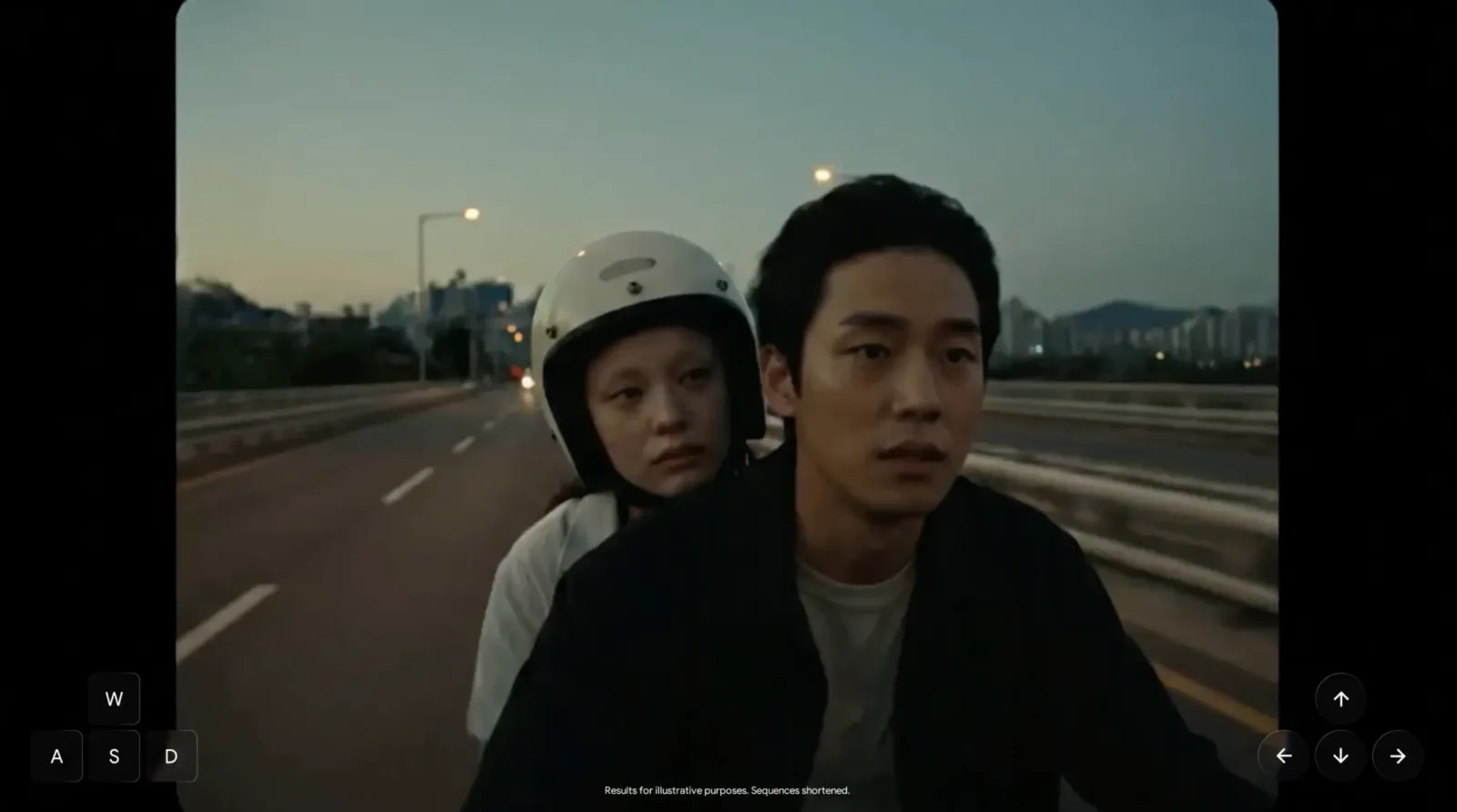
Google has officially pulled back the curtain on Genie 4, its latest world model designed to generate interactive experiences rather than just static video clips. According to The Verge, this update marks a significant departure from previous iterations by focusing on duration, interactivity, and sensory richness. The model can now produce experiences lasting up to two minutes, doubling the one-minute limit of its predecessor, Genie 3. This extension in time is not merely a technical flex but a practical necessity for creating coherent narratives or usable simulations.
The core innovation here lies in the ability to update an experience in real time using natural language prompts. This means you do not have to wait for a render to finish to make changes. If a scene feels too dark or a character moves incorrectly, you can simply type a correction and watch the simulation adjust on the fly. This real-time feedback loop drastically reduces the friction between idea and execution, which is a massive hurdle in traditional 3D production pipelines.
Under the hood, Genie 4 is powered by Gemini 3.8 Flash, Google’s latest efficient model. This choice of engine allows for complex simulations that feel physically plausible while remaining responsive. The integration of audio generation is another critical piece of the puzzle. Video without sound often feels hollow and disconnected from reality. By synthesizing spatial audio that matches the visual environment, Google is closing the gap between digital creation and immersive presence.
What makes this particularly interesting for the broader tech ecosystem is the shift toward simulation as a service. Google is explicitly pitching Genie 4 for pre-visualization in filmmaking and prototyping in game development. This suggests a future where directors and designers can explore entire worlds before committing to expensive physical sets or code-heavy engines. It transforms the creative process from one of construction to one of curation and direction.
The implications for robotics training are equally profound. Simulated environments are already crucial for training AI agents to navigate the real world. Genie 4’s ability to generate realistic, interactive scenarios with audio and physics could accelerate the development of robots that need to understand complex, dynamic environments. This moves us closer to general-purpose robots that can adapt to unexpected changes without needing physical retraining.
However, we must view this with a critical eye. While the technology is impressive, the gap between a simulated experience and a fully playable game or a production-ready film scene remains vast. The current output is likely a prototype or a rough draft rather than a final product. The challenge for Google will be scaling this technology to maintain consistency and quality over longer durations and more complex interactions.
What this means for you If you are a content creator, developer, or strategist, this is a signal to start experimenting with generative simulation tools. The barrier to entry for visual prototyping is about to drop significantly. You can now test ideas visually and interactively without needing a team of 3D artists.
Try this workflow: Use a generative video tool to create a two-minute scene of your product in use. Then, use natural language prompts to change the lighting, weather, or user interaction in real time. This allows you to stress-test your visual concepts and gather feedback much faster than traditional storyboarding. Prompt idea: Generate a two-minute interactive demo of a [your product] in a [specific environment], then prompt to change the lighting to [specific mood] and add [specific sound effect] to see how it impacts the user experience.
Reporting basis: original story
← back to The Wire