#wearable · 2026-07-16
RayNeo Air 4 Pro: Dual Micro OLEDs for $239, But the Narrow Field of View Hurts
The verdict
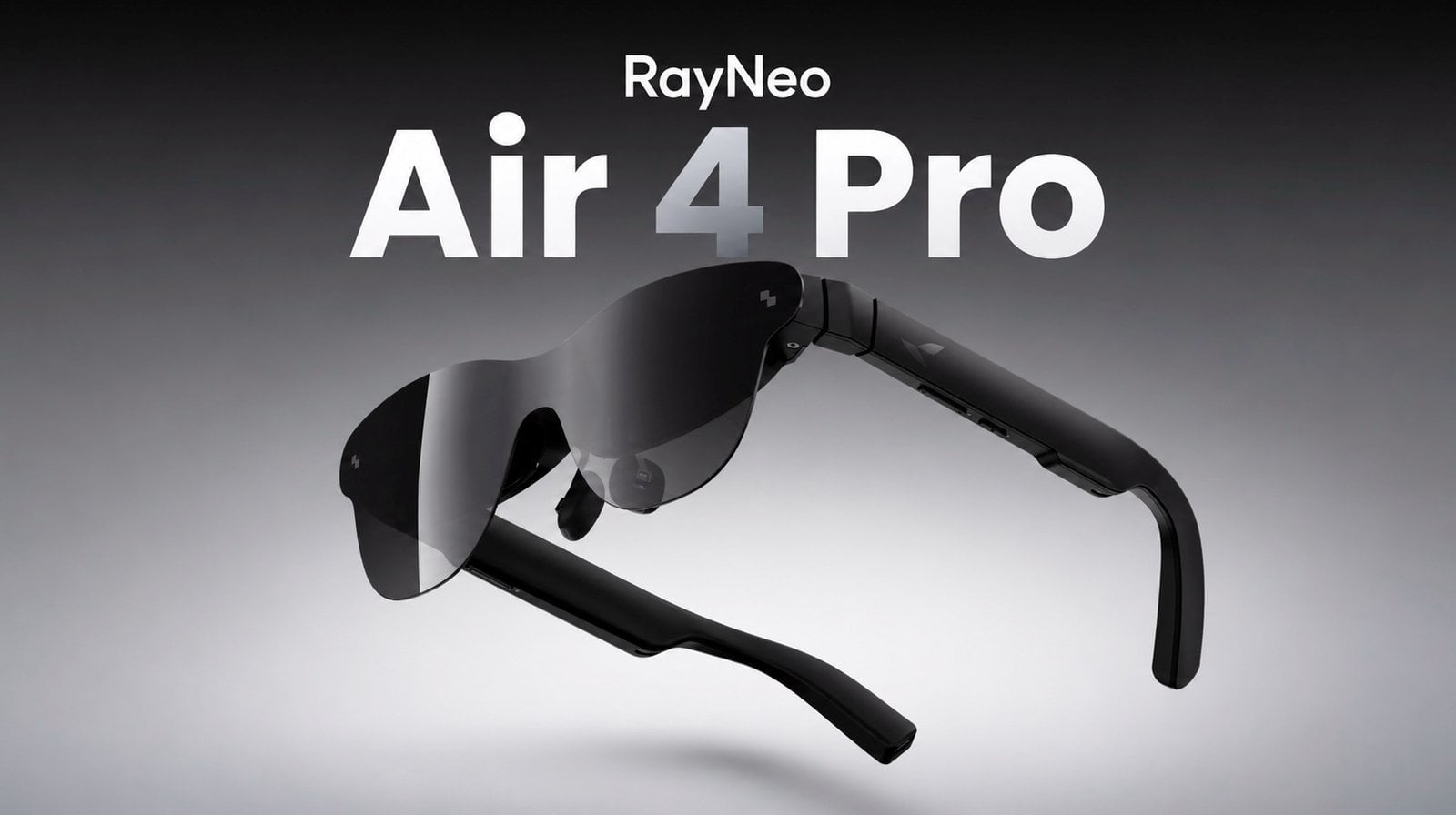
Excellent visual quality for the price, but the narrow field of view and wired-only design limit it to specific use cases like travel and handheld gaming.
$239
What slaps
- +Dual micro-OLED displays with 1200 nits brightness
- +Bang & Olufsen-tuned spatial audio
- +Lightweight 79-gram design for comfort
- +HDR10 support with SDR-to-HDR conversion
What stings
- −Narrow 47-degree field of view
- −Wired USB-C connection only, no wireless
- −Buggy companion app and software issues
- −Refresh rate caps when HDR is enabled
🚩 Before you buy
- !Buggy companion app
- !Wired-only connection limits mobility
- !Narrow 47-degree field of view
Spec sheet
| Display Type | Dual Micro OLED |
| Brightness | 1200 nits |
| Refresh Rate | 120 Hz (SDR) / 60 Hz (HDR) |
| Field of View | 47 degrees |
| Weight | 79 grams |
| Audio | Bang & Olufsen-tuned |
| Connectivity | USB-C (Wired only) |
| Price | $239 (discounted from $299) |
How it stacks up
| Product | Price | Key spec | Verdict |
|---|---|---|---|
| RayNeo Air 4 Pro | $239 | 1200 nits, 47 FOV | Best budget visual quality |
| XREAL Air 2 | $299 | 120 Hz, 46 FOV | Better software ecosystem |
| Viture One | $349 | Active Noise Cancellation | Premium audio features |
The RayNeo Air 4 Pro: A Visual Powerhouse with Strings Attached
The wearable display market has exploded in recent years, promising a personal cinema in your pocket. The RayNeo Air 4 Pro enters this crowded space with an aggressive price point, currently discounted to $239 from its standard $299. It promises dual micro-OLED displays, HDR10 support, and audio tuned by Bang & Olufsen. After spending a month with the device, the picture is clear: the RayNeo Air 4 Pro offers exceptional visual fidelity for the price, but its form factor and connectivity limitations prevent it from being a universal replacement for traditional screens.
Visual Performance: Bright, Sharp, and Limited
The standout feature of the RayNeo Air 4 Pro is undoubtedly its display technology. Each eye is served by a micro-OLED panel capable of reaching up to 1200 nits of brightness. This is not just a spec sheet number; it translates to a viewing experience that remains vibrant and clear even in moderately lit rooms. Unlike many competing glasses that wash out in daylight, the Air 4 Pro maintains contrast and color accuracy that rivals much more expensive options.
The 120 Hz refresh rate ensures smooth motion for gaming and video playback. However, users should note a significant trade-off: when HDR10 is enabled, the refresh rate drops to 60 Hz. For most movie watchers, this is negligible. For competitive gamers, it might be a dealbreaker. The device also features SDR-to-HDR conversion, which attempts to boost the dynamic range of standard content, though the results can sometimes look slightly oversaturated.
The primary drawback is the 47-degree field of view. While this is standard for this class of device, it feels narrow compared to the immersive experience of a large TV or monitor. You are looking through a window rather than being enveloped by the image. This limitation makes the glasses less suitable for cinematic immersion but perfectly adequate for handheld gaming or watching a movie on a plane.
Audio and Comfort: The Bang & Olufsen Difference
RayNeo has partnered with Bang & Olufsen to tune the audio output, and it shows. The speakers are integrated directly into the temples of the glasses, providing a surprisingly immersive spatial audio experience. The sound is balanced, with clear highs and sufficient bass for casual listening. For shared spaces, the glasses include a Whisper Mode, which directs sound more precisely toward your ears, reducing leakage for those around you.
Comfort is another strong point. At just 79 grams, the Air 4 Pro is lighter than many competitors. The weight distribution is well-balanced, preventing the nose-heavy feeling that plagues some XR glasses. The included carrying case is durable, and the package also includes a prescription lens insert, which is a thoughtful addition for users who need corrective vision.
Connectivity and Usability: The Wired Reality
Here is where the RayNeo Air 4 Pro reveals its compromises. The device relies entirely on a wired USB-C connection. There is no wireless Bluetooth or proprietary dongle option for video transmission. This means you are tethered to your source device, whether it is a smartphone, laptop, or gaming console like the Nintendo Switch. While this ensures low latency and stable video quality, it restricts mobility.
The companion app, which handles settings and firmware updates, is buggy and unreliable. Users have reported crashes and connectivity issues that detract from the otherwise plug-and-play experience. Additionally, the lack of advanced XR features like cameras or spatial awareness means these glasses are strictly for media consumption. They do not offer augmented reality overlays or interactive 3D environments.
Who Should Buy This?
The RayNeo Air 4 Pro is ideal for frequent travelers, commuters, and handheld gamers who want a larger screen without the bulk of a laptop or tablet. If you primarily watch movies on your phone or play Switch games on the go, the visual upgrade is significant. The discounted price of $239 makes it an attractive entry point into the wearable display market.
Who Should Skip It?
If you are looking for a true augmented reality experience, this is not the device. The narrow field of view and lack of interactivity make it poor for productivity or immersive gaming. Users who value wireless freedom will also find the wired-only design frustrating. In those cases, spending more on a device with wireless capabilities or a wider field of view might be a better investment.
Final Verdict
The RayNeo Air 4 Pro is a triumph of budget engineering. It delivers premium visual and audio quality at a price that undercuts most competitors. However, the narrow field of view, wired-only connectivity, and software quirks keep it from being a perfect product. It is a specialized tool for specific use cases, not a general-purpose display replacement. For the right user, it is an excellent purchase. For others, it is an interesting but limited gadget.
Get it if
Travelers, commuters, and handheld gamers seeking a portable high-resolution display
Skip it if
Users requiring wireless connectivity, wide field of view, or augmented reality features
$239
Affiliate links support the site at no cost to you.