#dev-board · 2026-10-04
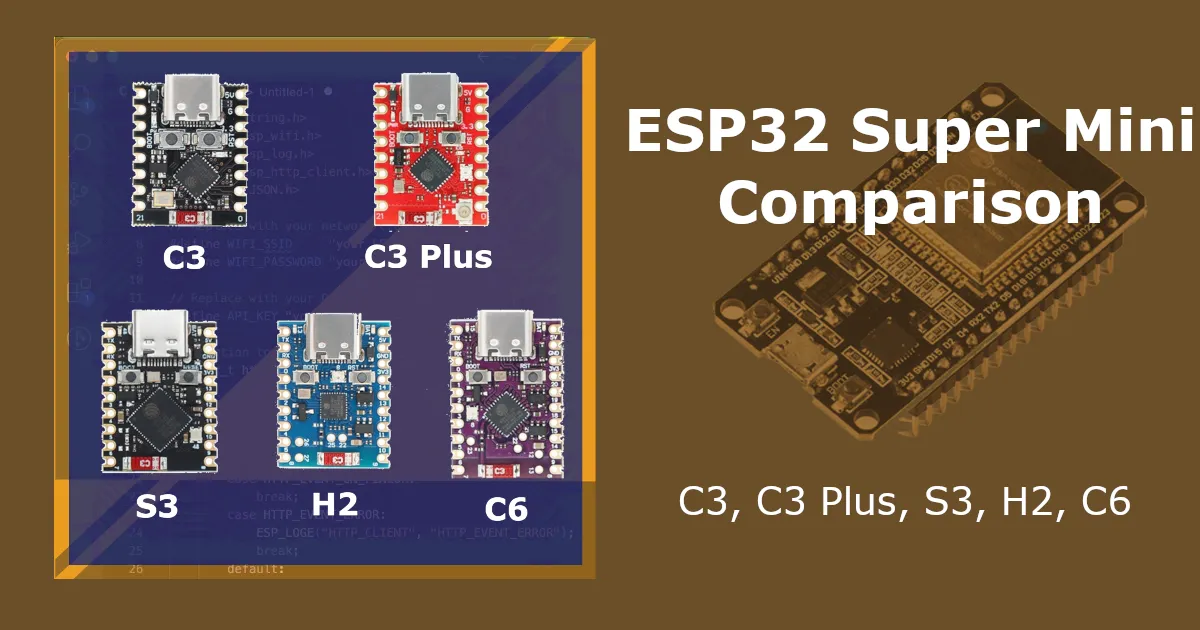
ESP32-H2: 20mA Active Power Makes This the Best Battery-Powered Zigbee Board Yet

The verdict
If you're building battery-powered smart home devices with Zigbee or Thread, this is the board to buy right now.
$2-4 (chip), $8-15 (dev boards)
What slaps
- +Exceptionally low 20mA active power consumption for Zigbee
- +Native Zigbee 3.0 and Thread 1.x support with 802.15.4 radio
- +Works with existing ESP-IDF toolchain and libraries
- +RISC-V architecture keeps costs low
What stings
- −Single 96MHz core is slower than ESP32-C3 or ESP32-S3
- −No Wi-Fi means you need a separate coordinator hub
- −Limited GPIO count (19 pins) compared to other ESP32 variants
Spec sheet
| CPU | RISC-V 32-bit single-core @ 96MHz |
| Wireless | Bluetooth LE 5.0, IEEE 802.15.4 (Zigbee 3.0, Thread 1.x) |
| Active Power | 20mA typical (Zigbee TX) |
| Deep Sleep | ~10-15µA |
| RAM | 320KB SRAM |
| Flash | 2MB or 4MB (in-package) |
| GPIO | 19 configurable pins |
| Package | QFN32 (4×4mm) |
| Price | $2-4 (chip), dev boards $8-15 |
How it stacks up
| Product | Price | Key spec | Verdict |
|---|---|---|---|
| ESP32-H2 | $2-4 | 96MHz RISC-V, Zigbee/Thread, 20mA active | Best for battery IoT |
| ESP32-C6 | $3-5 | 160MHz RISC-V, Wi-Fi 6 + Zigbee, 80mA active | Better performance, worse battery |
| nRF52840 | $5-7 | 64MHz ARM, Zigbee/Thread, 8-15mA active | Lower power, worse tooling |
The Battery-Powered Smart Home Gap
Espressif has spent years flooding the maker market with capable, cheap Wi-Fi microcontrollers. The ESP8266, ESP32, ESP32-C3, they've all carved out massive niches in DIY projects. But there's always been one glaring problem: Wi-Fi is a battery killer. If you want to run a door sensor, temperature monitor, or leak detector for months on a coin cell, Wi-Fi simply doesn't work. You need Zigbee or Thread.
Enter the ESP32-H2. This is Espressif's first serious attempt at the low-power mesh networking market, and they've built it around a 96MHz RISC-V core with native IEEE 802.15.4 support. That means full Zigbee 3.0 and Thread 1.x compatibility out of the box, integrated into the familiar ESP-IDF development environment you already know. The standout spec is the 20mA active power consumption during Zigbee transmission, roughly one-quarter what the ESP32-C6 draws when using Wi-Fi. For battery-operated sensors, that difference is the entire point.
Unlike the dual-core ESP32-S3 or the Wi-Fi-enabled ESP32-C6, the H2 strips away everything you don't need for a low-power sensor node. No Wi-Fi. No fancy dual cores. Just Bluetooth LE 5.0, the 802.15.4 radio, 19 GPIO pins, and enough SRAM to run your application. The tradeoff is obvious: you need a separate Zigbee coordinator or Thread border router to get these devices talking to your network. But if you're already running Home Assistant with a Zigbee USB stick or an Apple HomePod with Thread support, the ESP32-H2 slots right in.
What You Actually Get
The ESP32-H2 ships in a QFN32 package with either 2MB or 4MB of in-package flash, depending on the variant (FH2 vs FH4). The 96MHz single-core RISC-V processor won't win speed contests, it's slower than the 160MHz dual-core ESP32-C3, but for reading a temperature sensor every 30 seconds and transmitting a Zigbee packet, it's more than sufficient. You get 320KB of SRAM, standard peripherals like UART, I2C, SPI, ADC, and PWM, plus hardware support for AES, SHA, RSA, and ECC cryptography.
The 802.15.4 radio supports both 2.4GHz Zigbee and Thread, with a sensitivity of -103dBm for Zigbee RX and a transmit power up to +20dBm. That's better range than most cheap Zigbee modules. Bluetooth LE 5.0 is included for initial provisioning or direct smartphone connections, though you'll mostly use Zigbee or Thread for the actual network mesh. Deep sleep power consumption sits around 10-15µA, meaning a CR2032 coin cell could theoretically power a simple sensor for a year or more with smart duty cycling.
| Feature | ESP32-H2 | ESP32-C6 | nRF52840 |
|---|---|---|---|
| CPU | 96MHz RISC-V | 160MHz RISC-V | 64MHz ARM M4 |
| Wireless | Zigbee, Thread, BLE 5.0 | Wi-Fi 6, Zigbee, BLE 5.3 | Zigbee, Thread, BLE 5.3 |
| Active Power | 20mA (Zigbee TX) | 80mA (Wi-Fi), 25mA (Zigbee) | 8-15mA |
| Deep Sleep | ~10-15µA | ~8µA | ~2µA |
| Toolchain | ESP-IDF | ESP-IDF | nRF Connect SDK |
| Price (chip) | $2-4 | $3-5 | $5-7 |
Development Experience
If you've worked with any ESP32 variant, the H2 feels instantly familiar. You're using the same ESP-IDF framework, the same PlatformIO integration, the same Arduino core if you prefer simplicity over control. Espressif provides Zigbee and Thread protocol stacks as ESP-IDF components, so you're not writing raw 802.15.4 code from scratch. Example projects for door sensors, temperature monitors, and light switches are available in their GitHub repositories.
The downside is that Zigbee and Thread development is more complex than Wi-Fi. You need to understand network coordinators, binding tables, cluster libraries, and device commissioning flows. If you're used to throwing together an ESP8266 with a simple HTTP POST to your server, Zigbee has a steeper learning curve. But once you've built one Zigbee device, the pattern repeats cleanly. The H2 works with standard Zigbee coordinators like the Sonoff Zigbee 3.0 USB dongle or Home Assistant's built-in Zigbee integration (ZHA or Zigbee2MQTT).
Who Should Skip This
The ESP32-H2 is not a general-purpose microcontroller replacement. If your project needs Wi-Fi, buy an ESP32-C3 or ESP32-C6. If you need dual cores for parallel processing, get an ESP32-S3. If you're building a high-speed data logger or real-time control system, the 96MHz single-core H2 will feel sluggish compared to a 240MHz ESP32. And if you're working on commercial products with strict power budgets, Nordic's nRF52840 still edges out the H2 in deep sleep efficiency (2µA vs 10-15µA).
You also need to accept that Zigbee and Thread require a coordinator hub. If you're building a standalone device that talks directly to a phone app, stick with Bluetooth LE on an ESP32-C3. The H2 is purpose-built for mesh networks where dozens or hundreds of battery-powered sensors report back to a central hub. If that's not your use case, this chip won't solve your problem.
Who Should Buy Immediately
If you're building DIY smart home sensors and you've been frustrated by the battery life of Wi-Fi boards, the ESP32-H2 is exactly what you've been waiting for. Door/window sensors, temperature monitors, soil moisture sensors, leak detectors, anything that needs to run for months on a battery and integrate with Home Assistant, Apple Home, or Google Home. The combination of Zigbee 3.0 support, Thread compatibility, and the familiar ESP toolchain makes this the easiest entry point into low-power mesh networking.
Dev boards are already shipping from vendors like M5Stack and Seeed Studio in the $8-15 range, and bare chips are available for under $4 in single quantities. That's cheaper than equivalent nRF52840 modules and significantly easier to develop for if you already know the ESP ecosystem. The 20mA active consumption is good enough for real-world battery projects, you're looking at 6-12 months on a pair of AA batteries with reasonable duty cycling.
The Verdict
The ESP32-H2 is a focused, purpose-built chip that does one thing exceptionally well: low-power Zigbee and Thread networking for battery-operated IoT devices. It's not trying to be the fastest ESP or the most feature-rich. It's trying to let you build a door sensor that lasts a year on a coin cell while integrating seamlessly with your existing smart home setup. And at that specific task, it succeeds completely.
At $2-4 per chip and with mature ESP-IDF support, there's no reason to struggle with more expensive alternatives or reinvent the wheel with bare 802.15.4 radios. If your project fits the use case, battery-powered mesh sensors for smart homes, this is the board to buy. If it doesn't, Espressif has a dozen other ESP32 variants that will. But for the niche the H2 targets, it's the new default choice.
Get it if
DIY makers building battery-powered Zigbee or Thread sensors for Home Assistant, Apple Home, or Google Home ecosystems who already know the ESP development environment.
Skip it if
You need Wi-Fi connectivity, dual-core processing, faster than 96MHz performance, or the absolute lowest deep sleep power (under 5µA) for multi-year coin cell operation.
$2-4 (chip), $8-15 (dev boards)
Affiliate links support the site at no cost to you.